Project brief:
A nation's history is often reflected in museums, memorials, and preserved artifacts, highlighting pieces that a culture proudly showcases. However, some artifacts don’t evoke the same sense of pride. Instead, they carry stories that are far from glorious: histories of exclusion, oppression, and marginalization.
A nation's history is often reflected in museums, memorials, and preserved artifacts, highlighting pieces that a culture proudly showcases. However, some artifacts don’t evoke the same sense of pride. Instead, they carry stories that are far from glorious: histories of exclusion, oppression, and marginalization.
This project asks us to rethink and redesign a cultural artifact that has symbolized exclusion and oppression. Through speculative design, we have to imagine alternative futures in which these objects are transformed. Through interaction and immersive design techniques, into symbols of inclusion, empowerment, and social justice.
The oppresive artifact I chosen was codeswitching
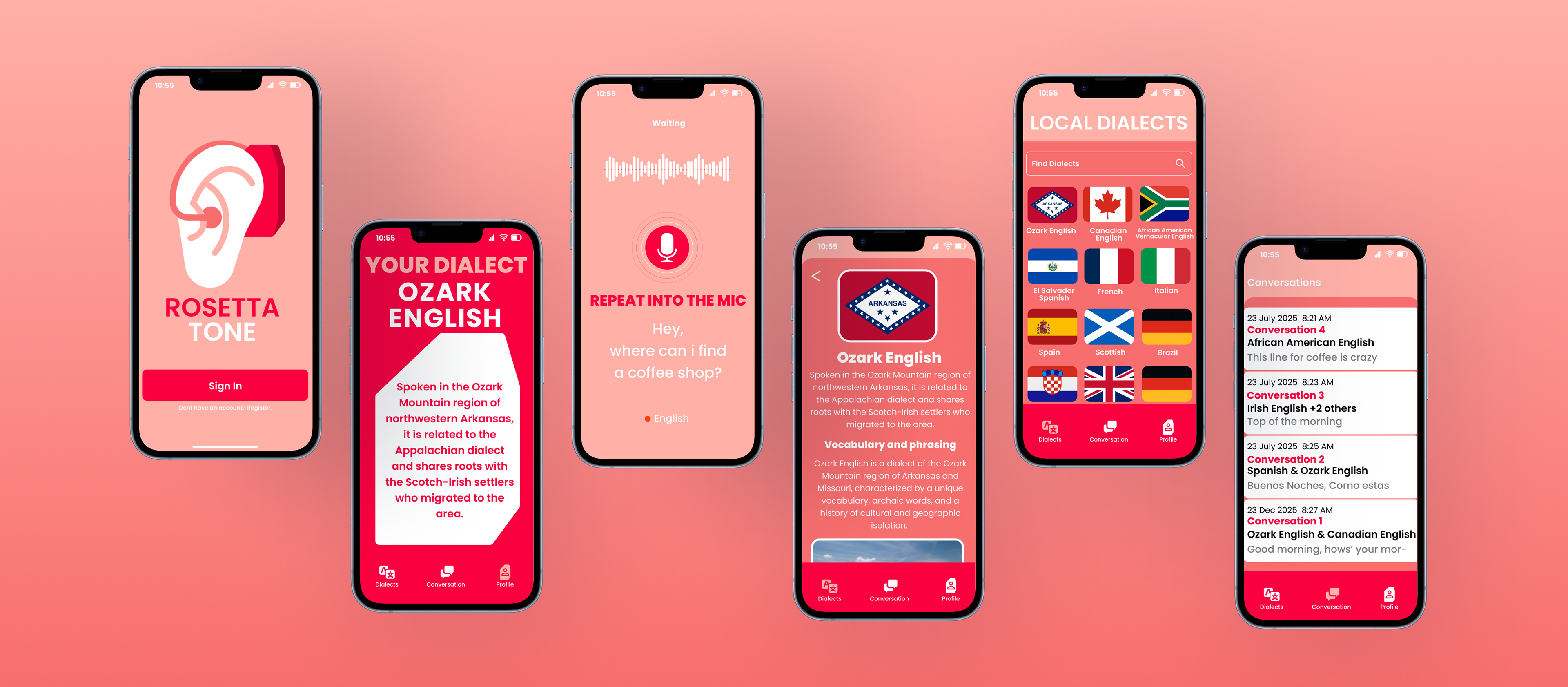
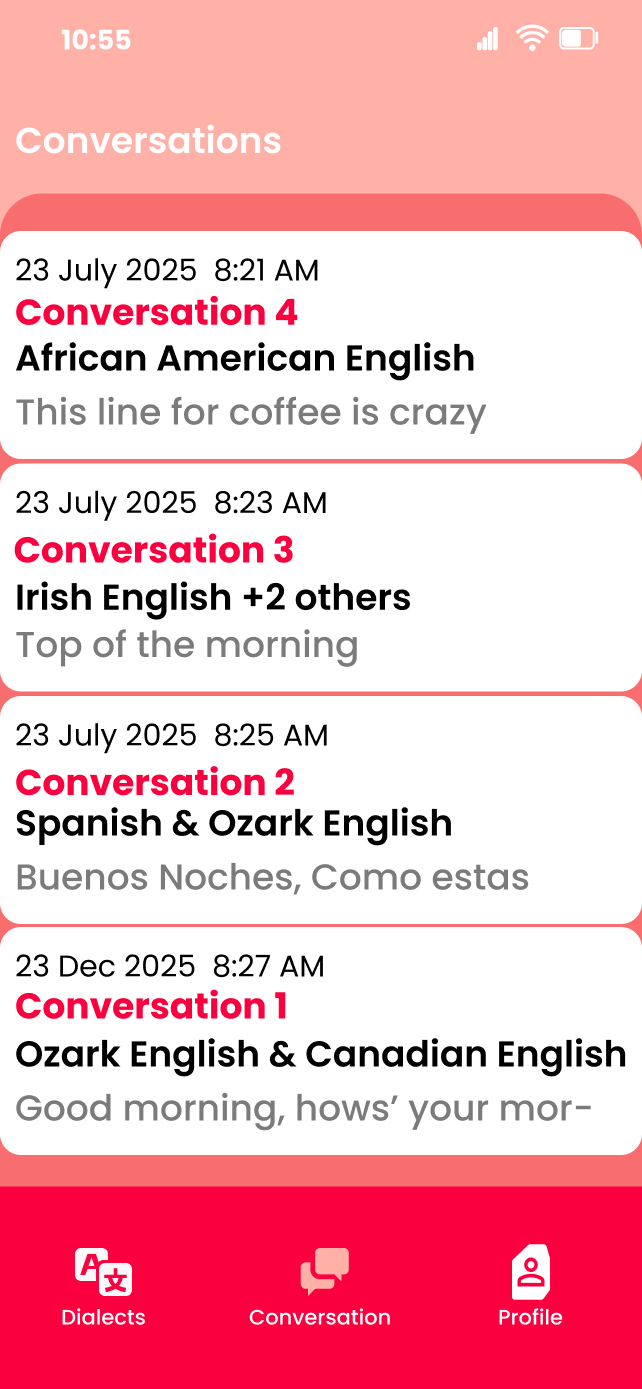
The Rosetta Tone is an speculative app created to allow users to not have to worry about the way they talk and how to fix it but rather to embrace it and discover more about themself.
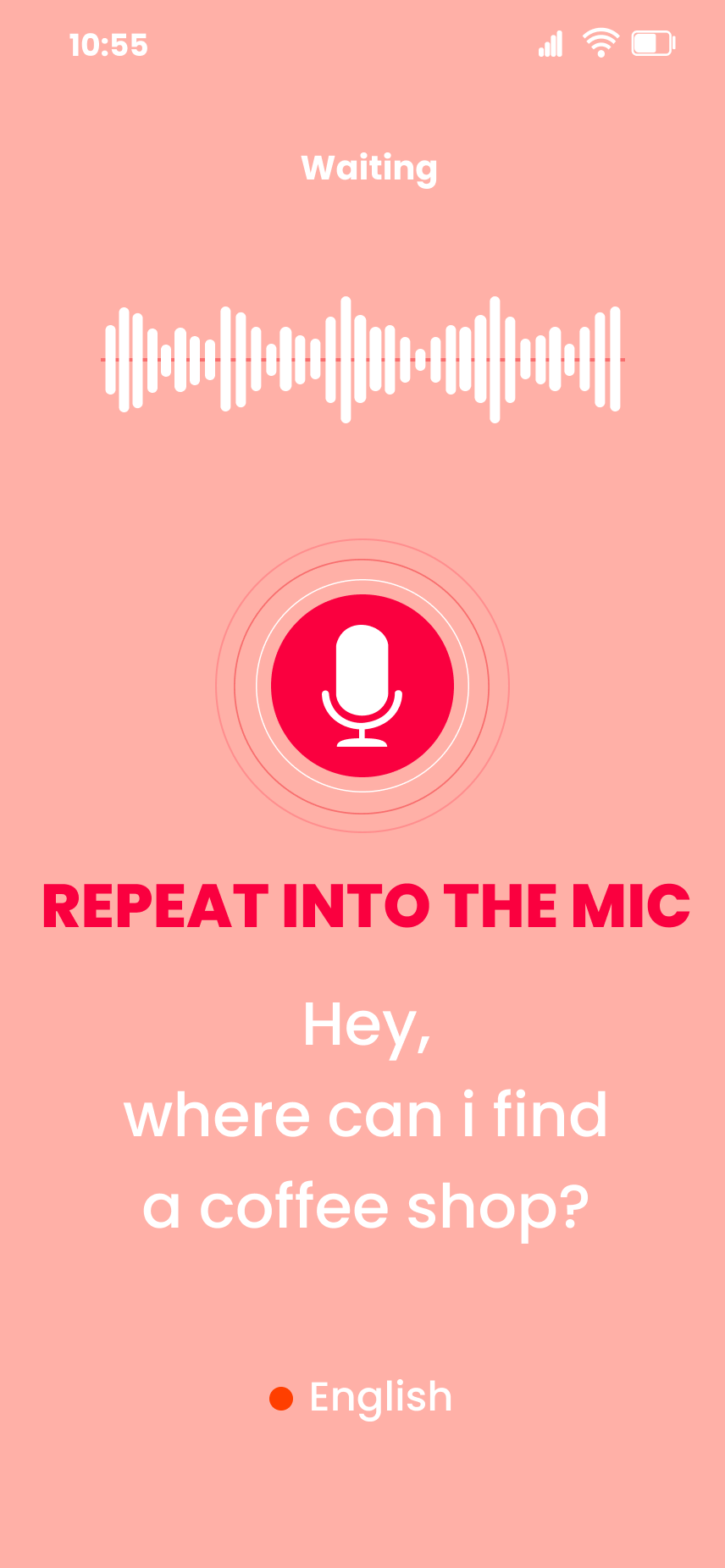
The journey starts by celebrating your voice. The app records a baseline of your natural speech patterns, creating a unique acoustic profile
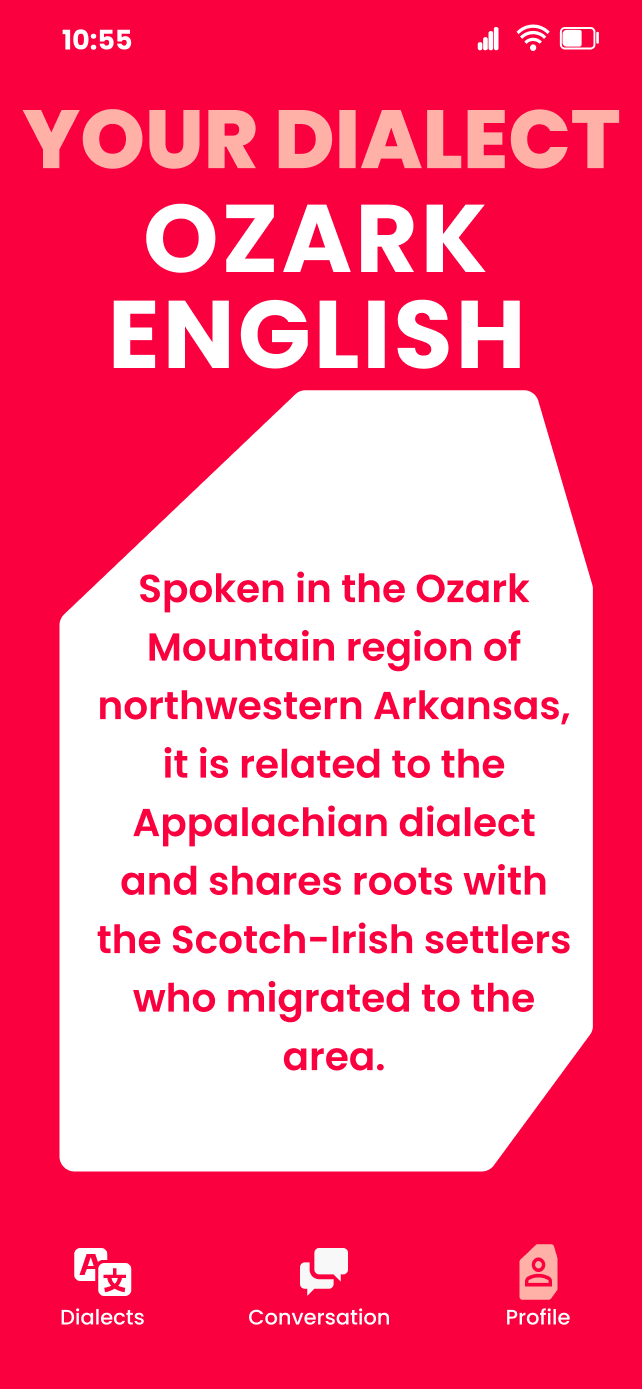
You'll find a detailed profile of your unique speech patterns from the rhythm of your words to the distinct sounds that make your accent yours. It's a snapshot of how you communicate naturally, before any learning begins.
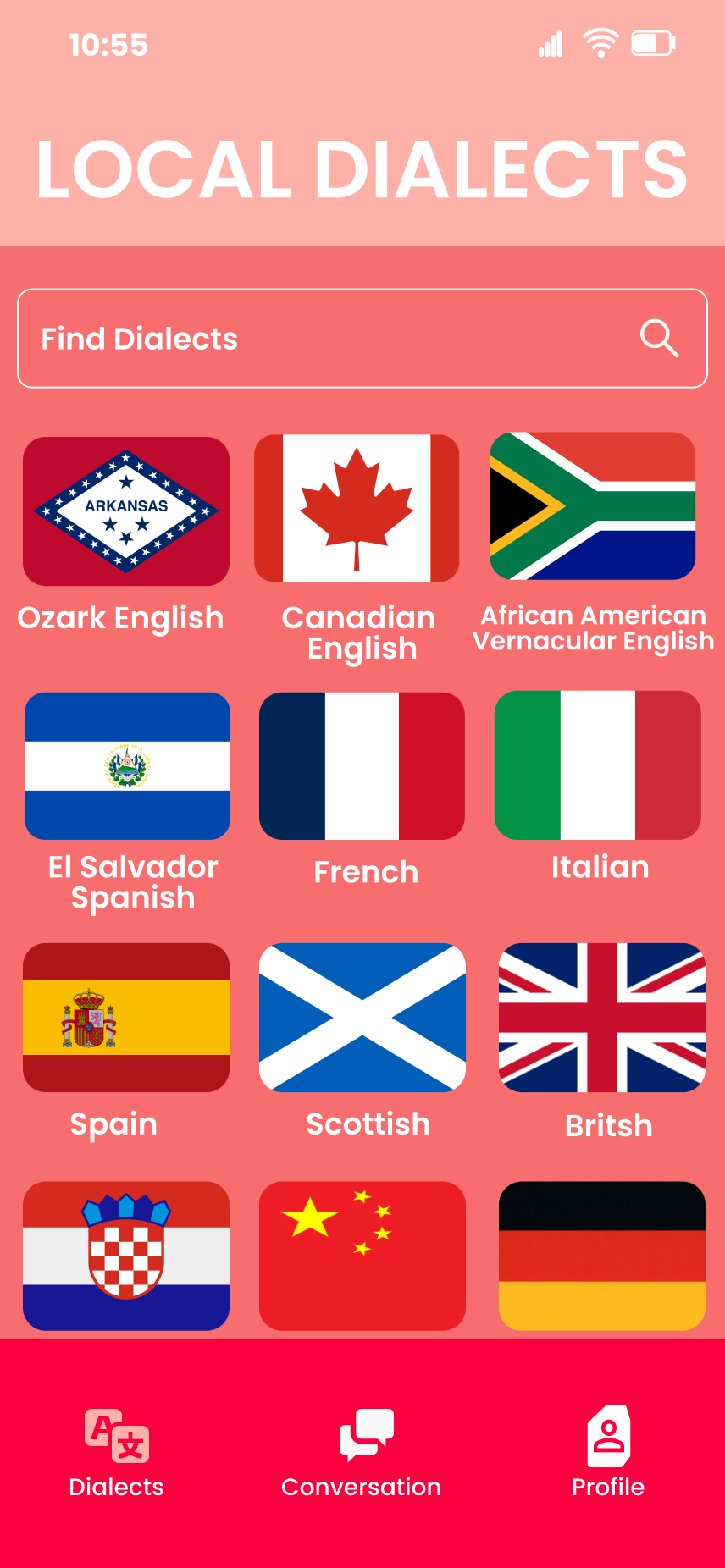
The app would catalogs regional and social dialects, not as 'right or wrong,' but as patterns of vocabulary, tone, and rhythm used in different communities.